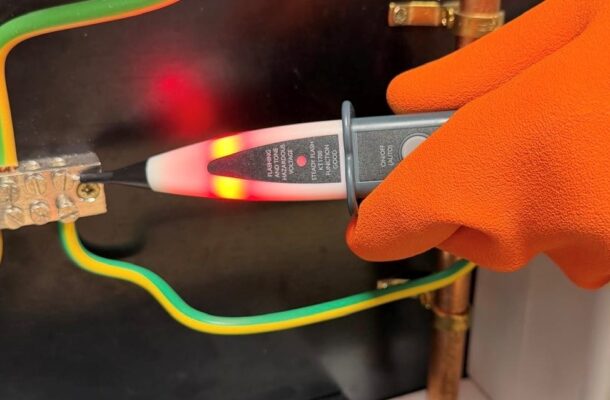
Stop using your Multimeter for proving dead!
Stop using your Multimeter for proving dead! – Why Multimeters are not right for Safe Isolation!
In our previous article, ‘Is your equipment GS38 compliant?’, we looked at what it means to be HSE GS38 compliant and why it is important to select measuring equipment that is suitable and rated for the prospective fault current when carrying out safe isolation.
For a recap, GS38 is the UK Health & Safety Executive’s safety requirements for Electrical test equipment for use on low-voltage systems.
Testing equipment and accessories that meet these standards are designed to minimise the risk of electric shock, arcing, and injury when working on low-voltage electrical systems (up to 1000 V AC / 1500 V DC).
Your checklist for using the correct equipment includes:
- Ideally, 2mm exposed tips (and we don’t recommend removable tips) and not more than 4mm exposed.
- Finger guards
- Use of high-integrity insulated leads (check for insulation damage before use)
- Appropriate CAT rating for the environment
- Properly maintained equipment
- Conforming to British Standards
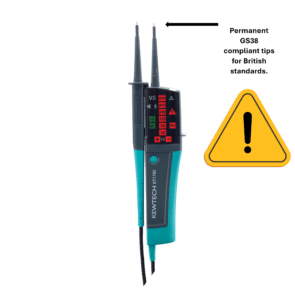
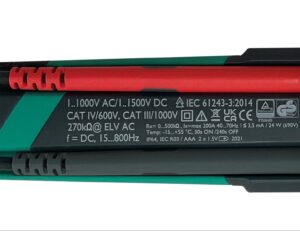
Why are Multimeters discouraged?
Unfortunately, it is the case that many multimeters out there are not manufactured to British Standards, with inappropriate test leads to carry out safe isolation, putting the user and others around them at risk of injury and death.
Furthermore, most mustimeters are designed for working on electronic equipment and are not rated for the prospective fault current that is found on low voltage installations.
This aside, however, there is even a common misconception and misuse of products when it comes to Digital Multimeters (DMM’s) for safe isolation.
The defining feature of a multimeter is that it requires the user to select the function and range required for testing through a rotary switch or buttons. Contrastingly, GS38 emphasises that test equipment used for proving dead must not be prone to incorrect settings or dependent on user-selected ranges.
The reasoning for this is one which seeks to remove the potential for human error. Should the user select the wrong function (e.g., continuity instead of voltage), the meter can give a false reading, fail to detect live voltage or, in some cases, be damaged or fail dangerously.
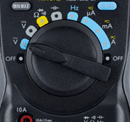
Warning: Incorrect selection of the instrument range, such as continuity or current, could cause the instrument to explode in a user’s hand and consequential flash burns.
What to look out for?
Any product which uses a rotary dial or a user selection function without auto-select.
GS38 specifically discourages multifunction instruments such as traditional multimeters unless they can safely detect voltage regardless of the setting.
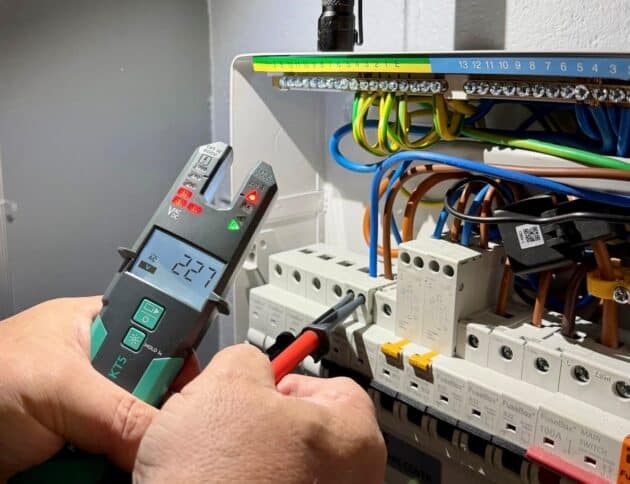
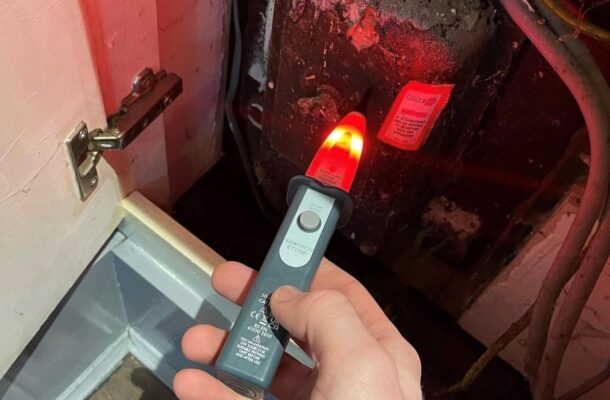
Kewtech’s KT5 with auto-function select!
The KT5 from Kewtech is a sophisticated all-in-one open-jaw current and voltage indicator with multimeter functionality. There is, however, a subtle yet distinguishing feature to the KT5 when compared to some similar products on the market.
The KT5 is built with an automatic function selection which removes the ambiguity from readings and prevents false negatives through user error, making it an ideal tool for safe isolation.
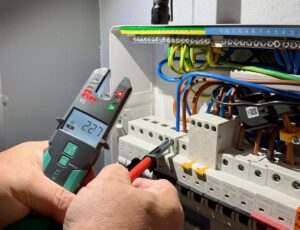
The KT5 will detect voltage regardless of the setting you have selected!
This means that, should you be on the wrong setting when seeking to prove dead, the KT5 will still provide you with a potentially lifesaving indication.
Furthermore, unlike some 2-pole testers, the KT5 does not need to detect a potential difference between probes to provide an indication of a dangerous voltage, it will detect a dangerous voltage with a single probe. Using a 2-pole tester that needs to see a potential difference between the probes will not detect a dangerous voltage where an earth, neutral or a separate phase is not present, but a single line voltage is present.
The bottom line
Safe isolation is not an area where compromise or convenience should ever outweigh safety. While digital multimeters have their place, they are often unsuitable for proving dead due to their often-inappropriate test leads/probes as well as their reliance on correct function selection by the user and inadequate fault current rating.
By choosing equipment that is purpose-built for safe isolation, compliant with British Standards, and capable of detecting voltage regardless of user settings, electricians can significantly reduce the risk of false readings and potentially fatal accidents. Investing in the right test equipment isn’t just about compliance—it’s about protecting lives, including your own.
Remember: Test Before You Touch!

More News Articles
2 Feb 2026
Is your equipment HSE GS38 compliant?
5 Jan 2026
The hidden dangers of Phenolic Breakdown